

I’m sitting here with a small but well-deserved (half) glass of red wine. Its been a busy day on the farm and in the garden and that calls for the need for a wine don’t you think? It usually happens to me at least once every year. Who knows why? I don’t. But it happens, and you need to be prepared. You go out to do the ‘lambing beat’ on a cold wintry morning and there she is. A newly birthed ewe hanging around a limp yellowy-white ‘flat’ lamb. For reasons only known to nature herself, the lamb is flat out on the ground on the brink of death. Despite having been lovingly cleaned and stimulated by the mother, the lips are cold and blue, and the little body feels deathly cold to the touch.
So back to the house I go, with above mentioned floppy, ‘flat’ lamb in my arms, leaves, mucous and all. So if you read my previous post titled Emergency Lambs Milk Formula you will have a cupboard full of old towels, blankets, and ingredients for the formula. But the most immediate task to hand is to get the poor little blighter warmed up. And the trick is to do it not too quickly.
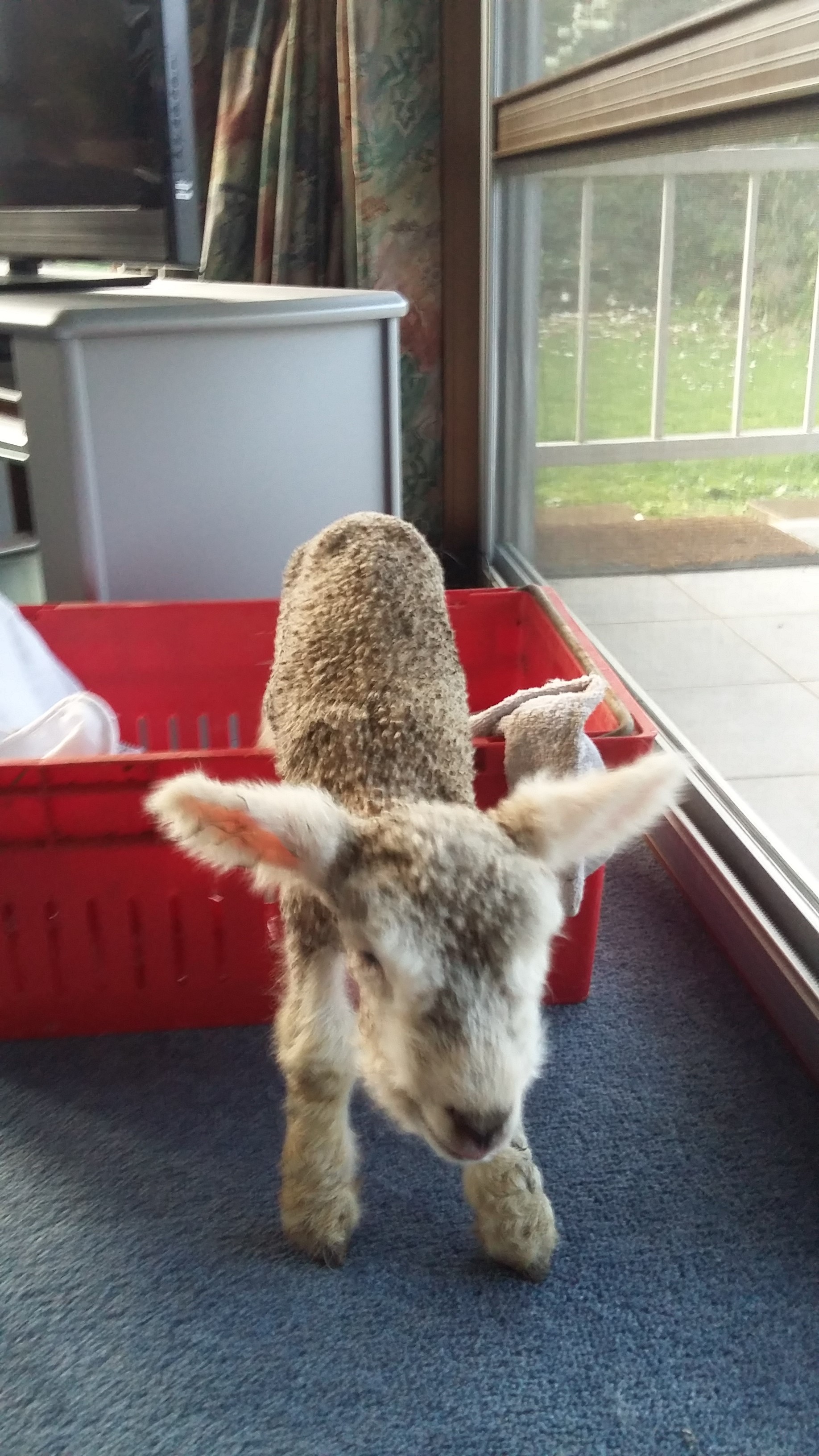
I filled the laundry tub with luke warm water. Only luke warm, as she was very cold and I didn’t want to add any more stress to her already compromised little body. I lay her in the tub with her head in one hand, and gently stimulated her body by quietly taking the remaining bits of afterbirth off. Then I lay her on a pile of towels and covered her while I ran a slightly warmer tub of water. She lay in this for a few minutes until I could feel that her legs were warming up. I took her out, quickly towel dried her, wrapped her up in a woollen blanket, and sat and cuddled her.
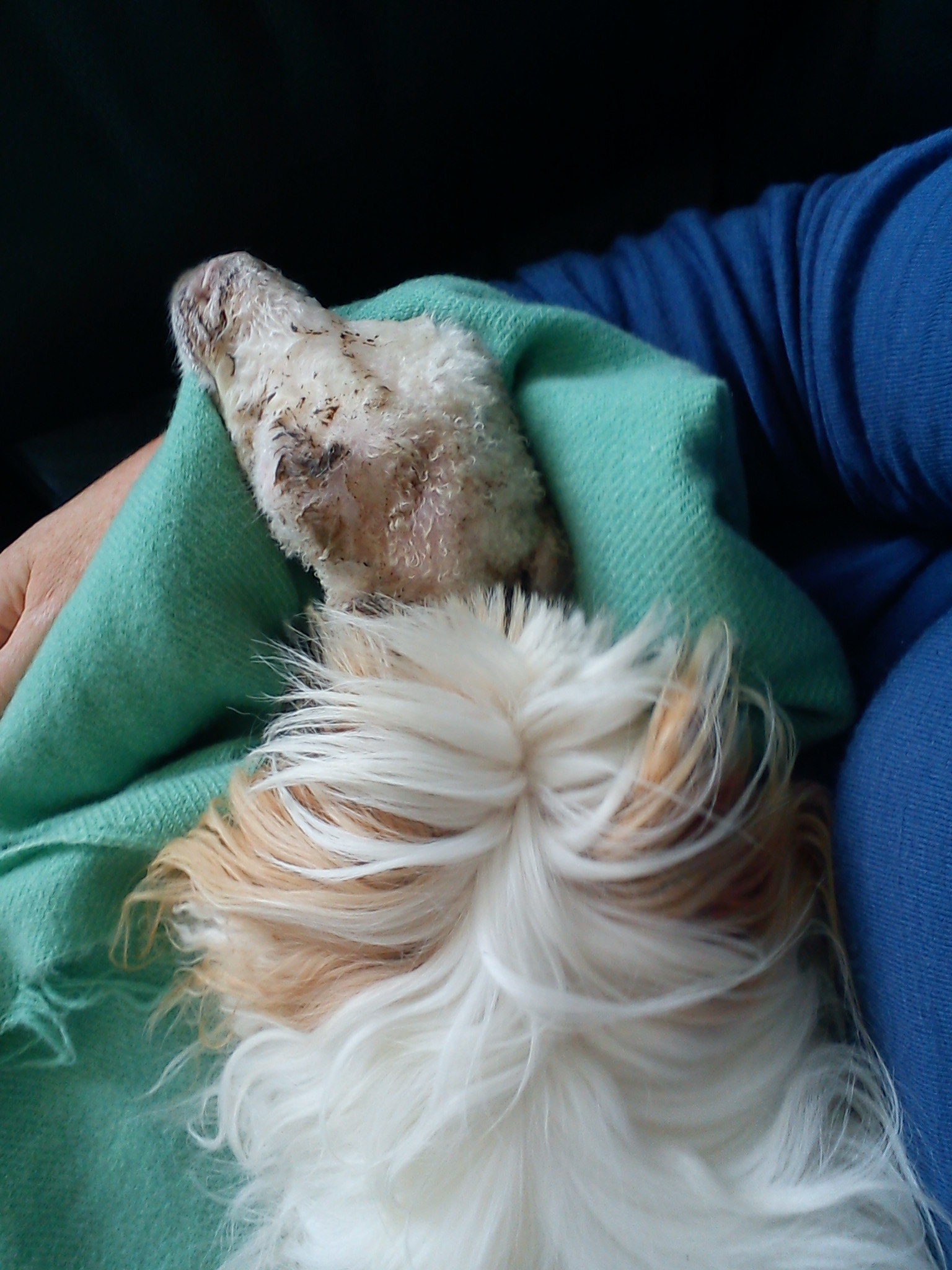
Oscar was most indignant that I should be cuddling something else other than him, so he was on my lap too, trying to get closer to me than the lamb was. Talk about ‘sibling rivalry’!!
Anyway, after a while she started shivering, a good sign, and trying to move about a little. So I set about making up some lambs milk formula and warming it to blood temperature. Now, often times they are initially too weak to suck, so you just have to hold their mouth open with their head raised and neck stretched (as if they are feeding off their mother), and give a wee squeeze to just get a couple of drops in. Don’t squeeze any more in until you have seen the lamb swallow the first lot. If you put too much in it could go down into their lungs and after a couple of days they will get pneumonia and die. You may have to use a dropper for a couple of times instead of a teat if they are too weak to suck. Don’t give more than 50mls at this early stage, and before long you will notice that she is perkier and stronger, and able to suck off a teat and take 100mls. If you have cows colostrum, prepare this as I wrote about in Emergency Lambs Milk Formula. And make sure you spray her umbilical cord with iodine to prevent any infection from getting in through there.
You will know that she is getting the milk through her system when she starts pee-ing, and her black poo becomes that lovely karitane yellow.
If your lamb gets the scours, this can be life-threatening and is usually caused by overfeeding, or too rich milk/undiluted colostrum. Reduce the amount of milk each feed, and make sure its diluted at the right rate if it is milk powder formula. A little bit of egg yolk and/or Homemade Pectin in the milk will help bind them up. Always have fresh water available though, as they can dehydrate very quickly.
When you decide that she is going to survive and have purchased a bag of lambs milk powder, make sure that you dilute the mixture more than the recommended rate initially and slowly build up to the proper amount. This gives the little lambs delicate system a chance to get used to the new formula without getting scours.
If the lamb just doesn’t do well, then starts walking as though she has sore legs, her joints appear swollen, and there is a hard lump where the umbilical cord attaches to the body, this usually means ‘navel ill’ which is from infection coming in through the umbilical cord. This requires antibiotics from the vet.
If the breathing starts to sound rattley and laboured, that is usually pneumonia and also requires antibiotics from the vets. They often won’t survive this.
So I hope all of this was helpful. I will write more about the joys of farming sheep soon :))
Have a happy day.
Kind regards
Mumma Bear xx

 mumma bear's diary of a good life